

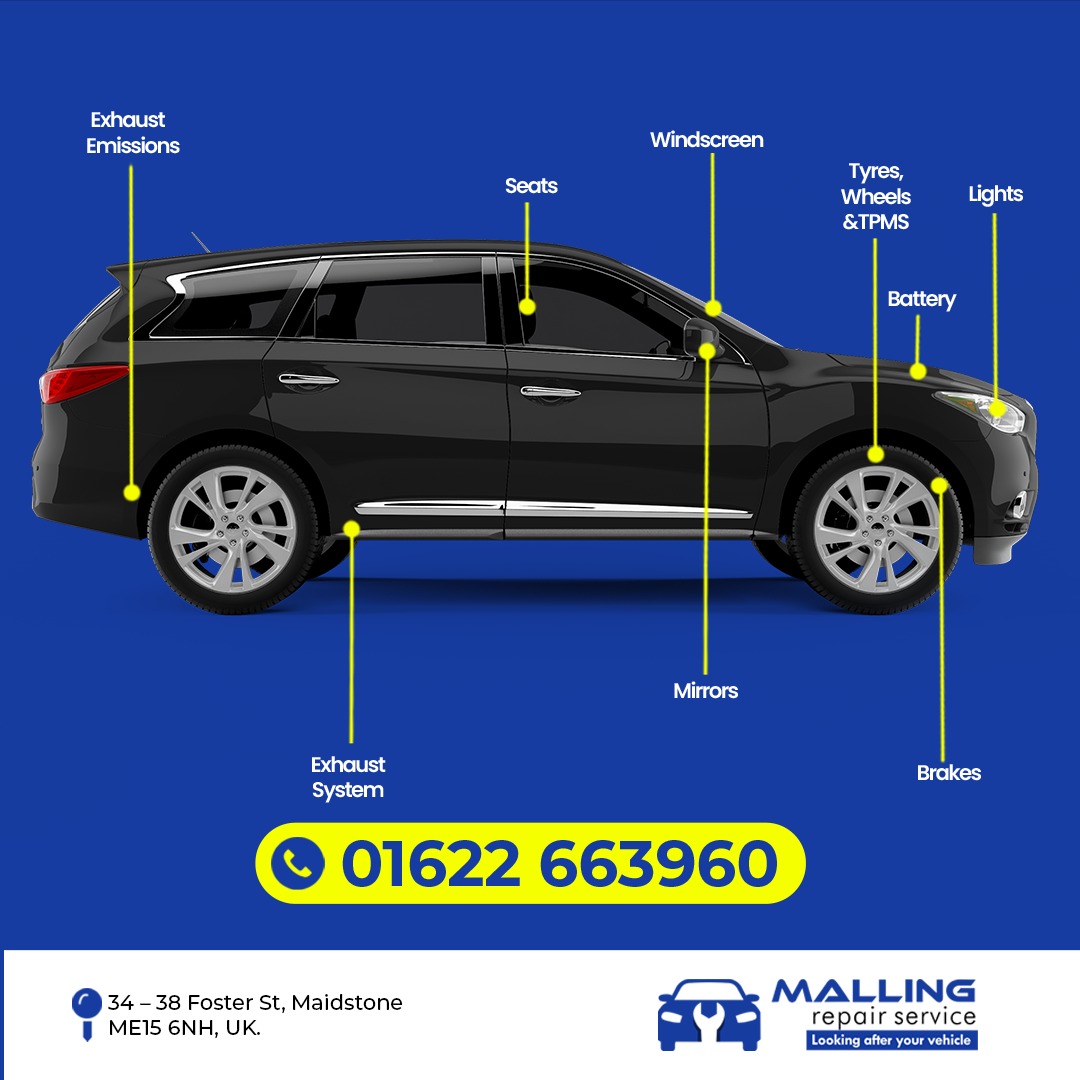
The MOT test, also known as the Ministry of Transport test, is a crucial procedure that ensures the safety and roadworthiness of a vehicle in the UK. However, many drivers are unaware that failing to prepare for the MOT test could result in minor issues being overlooked, leading to unnecessary failures and repair costs. At Malling Repair Service, we help drivers in Maidstone catch those small issues before they become costly failures.
This article covers everything you need to know about preparing your car for an MOT test, along with the complete pre-MOT checklist. If you follow these steps, you will be well on your way to passing the MOT with minimal hassle and maintaining your car’s good condition.
Check the Tyres
Tyres are among the most common causes of MOT test failures. They protect you against adverse road conditions, so it’s essential to ensure they’re in MOT-safe condition before your test. Preparation includes:
- Tyre Pressure: All tyres must be inflated to the correct pressure. Under-inflation will prevent the tyre from performing effectively, while over-inflation can also lead to problems. Use a tyre pressure gauge to set the pressure according to the manufacturer’s recommendations (found in your vehicle’s manual or on the door frame). Before doing this, ensure all tyres are properly inflated.
- Tyre Tread: The minimum legal tyre tread depth in the UK is 1.6mm. Use a tread depth gauge to check if your tyres meet the legal limit. If the tread is too low, it’s time to replace the tyres.
- Tyre Condition: Inspect for any visible damage, such as cuts, bulges, or punctures. Damage to the sidewall or tread of the tyre may result in the tyre being rejected during the MOT, so be sure to replace any damaged tyres before the test.
Test the Lights
Vehicle safety heavily depends on the lighting system, so it is crucial to have a functioning system for the protection of both your vehicle and others on the road.
Faulty lights are a common cause of MOT failure, so be sure to check the following:
- Headlights and Taillights: Ensure the headlights are working and properly aligned. Misaligned headlights can cause glare, which may result in an MOT failure. Want to avoid surprises? Learn the signs your vehicle might fail its MOT so you can address them early.
- Brake Lights and Indicators: Have two volunteers—one presses the brake pedal while the other checks if the brake lights are working. Test all indicators to ensure they function correctly. Replace any blown bulbs before the test.
- Fog Lights and Reverse Lights: Don’t forget to check the fog lights and reverse lights. These are essential and should work properly for the MOT.
If any of your vehicle’s lights are malfunctioning, replace the bulbs before the MOT. Visit Malling Repair Service for more information.

Inspection of the Brakes
Brake safety is the most crucial aspect of your vehicle, and during the MOT examination, it will be thoroughly tested. Here are the things you need to consider:
- Brake Fluid: Low brake fluid can lead to poor brake performance, compromising safety. Check the brake fluid levels and top up if necessary.
- Brake Pads: Worn brake pads can reduce braking efficiency and may cause squealing or grinding sounds when braking. If you hear such noises, it’s time to replace your brake pads. Unsure where to begin? Start with a full brake service to restore stopping power.
- Brake Performance: Drive your vehicle to a safe area and check if the brakes feel firm and responsive. If you experience a spongy feel or unusual vibrations, it’s advisable to consult a professional mechanic.
Having good brakes is crucial for passing the MOT. Make sure they are in the best condition before the test.
Ensure the Windscreen Wipers and Washer System Work
Also, ensure the wipers and washer system are operational. A clean windscreen is essential for visibility. The MOT includes a practical inspection of the vehicle, including the wipers and washer system. Check everything before trusting the test results. To avoid failing the test, check:
- Wipers: Ensure they are functioning correctly. If they leave streaks or make noise, the rubber blades require replacement.
- Windscreen Wiper Liquid: Ensure the windscreen wiper liquid is full. Without sufficient liquid, the MOT may fail, as the examiner will not be able to perform the necessary tests. Still unsure what the MOT includes? Find out what happens during an MOT test.
- Wiper Blades: Inspect the blades for any damage, cracks, or cuts. If they are worn out, replace them for optimal performance.
Inspect the Vehicle Exhaust System
The exhaust system is another crucial component of the MOT test, and it must be in good working order to minimize harmful emissions and ensure the vehicle meets environmental standards. Here’s how to prepare:
- Exhaust Smoke: Look for evidence of excessive smoke coming from the exhaust. Blue or black smoke could indicate an issue inside the engine, while white smoke may suggest a problem with the coolant system. If you notice any unusual emissions, have your car checked by a mechanic before the MOT.
- Exhaust Condition: Inspect the exhaust pipe system for holes, rust, or any damage. Depending on the extent of the damage, the MOT may fail to pass. Make sure the exhaust system is in good condition.
- Catalytic Converter: The catalytic converter helps reduce the emission of toxic gases from vehicles, ensuring they pass the MOT emissions tests. Have it checked if you suspect any issues with its function before the MOT test.
Examine the Car Battery
The car battery plays a crucial role in the vehicle’s electrical system, providing power to start the engine and operate various components. Before the MOT test, check the following:
- Battery Charge: Ensure the battery is fully charged and functioning properly. A weak or completely flat battery can cause starting issues and may result in a failed MOT.
- Battery Terminals: Inspect the battery terminals for corrosion and loose connections. Clean any corrosion and tighten any loose connections as needed.
- Electrical Components: Verify that all electrical components, including the air conditioning, lights, and other essential appliances, are functioning correctly.
If your battery is in good condition, you shouldn’t have any issues during the MOT test.
Analyze the Suspension System
The suspension system ensures a smooth ride and plays a significant role in your vehicle’s handling. Failing to maintain the suspension system could result in an MOT failure. Here’s what you should check:
- Shock Absorbers: Inspect the shock absorbers for any leaks or damage. Worn shock absorbers can affect the vehicle’s handling and safety, potentially leading to an MOT failure.
- Suspension Bushings: Inspect the suspension bushings for wear. If they are cracked or damaged, they will need to be replaced.
- Vehicle Handling: Test the vehicle on various surfaces to assess its handling capabilities. The car should remain stable and comfortable to drive.
If you notice any issues with the suspension system, you must address them before proceeding with the MOT.
Book Your MOT Test With Malling Repair Services
Ensure your vehicle is roadworthy and safe by booking your MOT test with Malling Repair Services. Our certified technicians provide thorough and trustworthy MOT testing, adhering to all government standards.
With transparent pricing, quick turnaround times, and expert advice, we make sure your car is ready to pass the test without any surprises.
Schedule your MOT test in Maidstone with us today for peace of mind and top-notch service. Follow the checklist above to pass your MOT Test easily.
Malling Repair Service is here to help you pass your MOT on the first try — no stress, no surprises.
FAQ’s
What are the MOT pre-checks?
Pre-MOT checks entail inspecting all tyres, brakes, lights, wipers, exhaust system, battery, suspension, and fluid levels to identify potential problems before the actual test date.
What happens if you fail the pre-MOT?
If you fail the pre-MOT, you’ll know which repairs or maintenance are needed to address any issues before the official MOT test.
Should I wash my car before an MOT?
Washing the car before the MOT helps the examiner inspect the vehicle’s condition and identify any potential problems, such as rust or damage, more clearly.
What are the common reasons for the failure of an MOT?
The most common reasons for MOT failure include bald tyres, defective lights, brake system issues, emissions problems, wiper failure, and low fluid levels, among others.
Is pre-MOT worth it?
Yes, a pre-MOT is worthwhile because it gives you time to address problems in advance, minimizing the risk of an official MOT failure and avoiding last-minute repairs.
How far can I drive to a pre-booked MOT?
As long as the vehicle is in roadworthy condition, you can drive to a pre-booked MOT. If there are serious faults, it’s better to avoid driving until those issues are repaired.