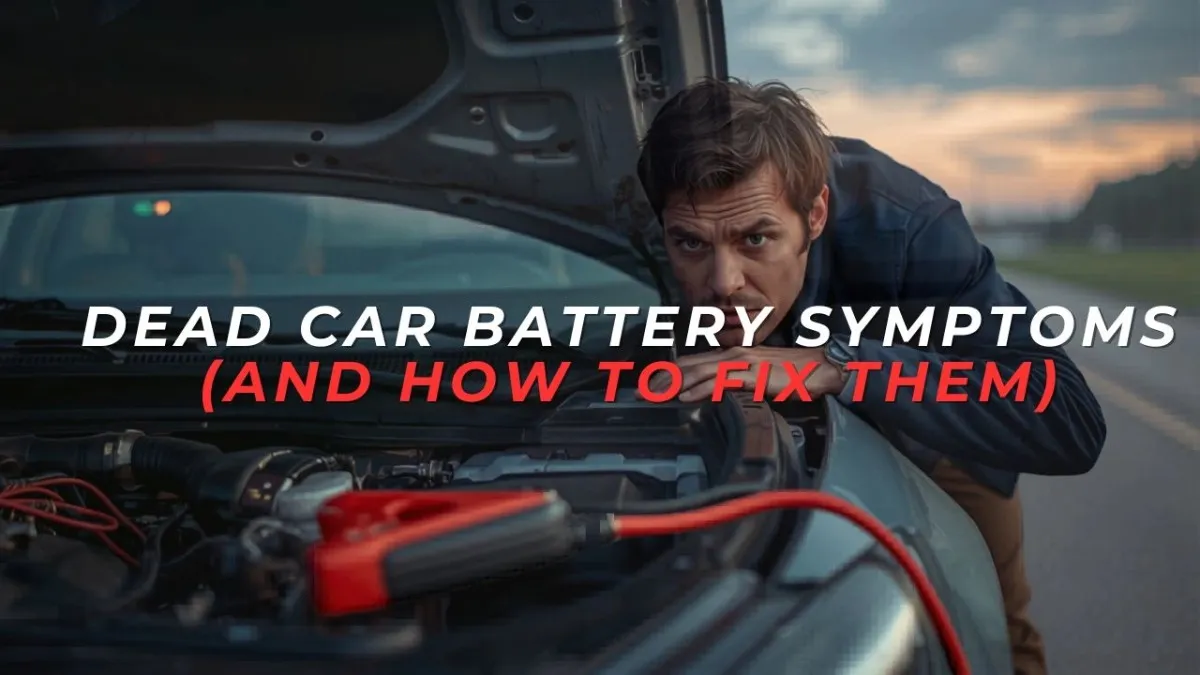
Few things ruin a morning faster than turning your key in the ignition and hearing nothing but a hollow clicking sound. A dead car battery is a frustrating problem, but it rarely happens without warning. If you know what to look for, you can spot battery failure symptoms early and save yourself from being stranded.
Whether you are dealing with a slow engine crank, flickering dashboard lights, or a car that simply will not start, understanding your car battery is essential. In this guide, we will walk you through the top dead car battery signs, explain how to test your battery voltage, and show you exactly what to do when your car battery dies.
What Are the Signs of a Dead Car Battery?
Your vehicle relies on its battery to provide the electrical current needed to fire up the starter motor and run essential electronics when the engine is off. When the battery starts failing, it leaves a trail of clues.
The most obvious signs include an engine that struggles to turn over, headlights that look unusually dim, or electric windows that move at a snail’s pace. You might also notice your dashboard battery warning light staying on while you drive. If your car won’t start at all and you hear a rapid clicking noise, you are almost certainly dealing with a dead car battery.
Why Do Car Batteries Die?
Car batteries do not last forever. Most have a lifespan of three to five years. However, several factors can accelerate battery degradation and lead to premature failure.
Environmental Causes
Extreme temperatures are tough on battery cells. Cold weather battery failure is common in the UK winter because freezing temperatures slow down the chemical reactions inside the battery, reducing its ability to hold a charge. Conversely, hot weather battery damage happens when high heat evaporates the battery fluid, damaging the internal structures. Seasonal battery stress means you need to pay extra attention to your vehicle during summer heatwaves and winter freezes.
Driver-Related Causes
Human error is a leading cause of a flat car battery. Leaving headlights on overnight or leaving the radio running without the engine on will quickly cause battery drain. Making too many short journeys is also problematic. When you only drive for a few minutes at a time, your alternator never gets the chance to fully recharge the battery capacity. Furthermore, leaving a vehicle unused for too long leads to a natural loss of charge.
Mechanical Causes
Sometimes, the battery is fine, but the charging system fails. Mechanical issues include:
- Alternator failure: The alternator powers your car’s electrics and recharges the battery while you drive. If the alternator fails, your battery will quickly drain.
- Loose battery terminals: Poor connections stop the electrical current from flowing properly.
- Corroded battery clamps: Build-up prevents a solid connection.
- Faulty starter motor: A broken starter motor can mimic dead car battery sounds.
- Internal battery short circuit: Internal plates touching can instantly kill the battery.
- Battery sulfation: Lead sulfate crystals build up on the battery plates, preventing it from holding a charge.
Age-Related Causes
As a battery ages, it experiences natural battery degradation. The internal chemical wear reduces its charge retention, meaning a five-year-old battery simply cannot hold the same amount of power as a new one.
Common Warning Signs of a Failing Battery
Spotting a weak car battery early gives you time to arrange a replacement before you get stuck. Watch out for these crucial warning signs.
Slow Engine Crank
When you turn the key, does the engine sound sluggish and heavy? A slow engine turnover means the battery lacks the necessary electrical current to spin the starter motor efficiently. This is often the very first sign of an impending dead battery.
Clicking Noise When Starting
If you turn the key and hear a rapid “click-click-click”, your starter motor is receiving a small amount of power, but not enough to crank the engine. This clicking noise is a classic dead car battery sound.
Weak Headlights and Electrics
Your battery powers the headlights, heater system, air conditioning, and dashboard lights before the engine starts. If you notice dim headlights, flickering dashboard lights, or weak electric windows, your battery is struggling to provide adequate voltage.
Battery Warning Light
Your dashboard battery warning light looks like a little square box with a plus and minus symbol. If this stays illuminated while you are driving, it indicates a charging system failure. The alternator might not be charging the battery, or the voltage regulator might be faulty.
Corrosion and Strange Smells
Pop the bonnet and inspect your battery. Do you see a fluffy, blue-green crust around the car battery terminals? That is battery corrosion, and it disrupts the electrical flow. Furthermore, if you notice a rotten egg smell, your battery might be leaking sulfuric acid due to internal damage or overcharging.
Flat Battery vs Dead Battery
People often use these terms interchangeably, but they mean different things in the automotive world.
What is a flat battery?
A flat car battery simply lacks a charge. Perhaps you left the dashboard lights on overnight. The battery cells are still healthy, and a simple jump-start or session on a battery charger will completely resolve the issue.
What is a dead battery?
A dead battery has reached the end of its usable life. It suffers from internal chemical wear, battery sulfation, or physical damage. Even if you use jump leads to start the car, the battery will not hold a charge from the alternator.
Key differences:
When you recharge a flat battery, it works perfectly again. When you recharge a dead battery, it goes flat again almost immediately. If you jump-start your car and it dies the next morning, a battery replacement is essential.
How to Tell if Your Car Battery Is Dead
Understanding exactly what is happening under the bonnet helps you decide the best course of action. Here is how to interpret different problem-based scenarios:
- Car won’t start battery dead: If there is no response at all when you turn the key—no lights, no sounds—the battery is completely drained.
- Battery warning light on while driving: Your alternator is likely failing to charge the battery. Pull over safely, as the car will soon lose power.
- Battery dies overnight: You either have a parasitic battery drain (something staying on) or the battery has lost its charge retention due to age.
- Dead battery but lights still work: Headlights require less power than a starter motor. You might have enough voltage for the lights, but not enough to crank the engine.
How to Start a Car With a Dead Battery
If you find yourself stranded with a flat battery, using jump leads is the fastest way to get moving. Follow this safe jump-start procedure:
- Park the cars close together: Ensure the working car and the dead car are close enough for the jump leads to reach, but make sure the vehicles are not touching.
- Turn everything off: Switch off the ignitions, headlights, and radios in both cars.
- Connect the red lead: Clamp one end of the red (positive) jump lead to the positive terminal of the dead battery. Clamp the other red end to the positive terminal of the good battery.
- Connect the black lead: Clamp one end of the black (negative) lead to the negative terminal of the good battery.
- Ground the final clamp: Attach the remaining black clamp to an unpainted metal surface on the dead car’s engine block (away from the battery). This prevents sparking.
- Start the working car: Let the good car run for about five minutes to send some battery charge over.
- Start the dead car: Turn the ignition on the dead car. If it starts, leave it running.
- Remove cables carefully: Remove the cables in the exact reverse order you attached them.
Safety precautions: Never cross the cables, and never lean directly over the battery. After jump-starting, drive the car for at least 30 minutes to let the alternator recharge the battery.
What to Do When Your Car Battery Dies
If your car battery dies and a jump-start does not work, you need a dead car battery fix.
First, check for obvious issues. Are the battery terminals loose? Is there severe corrosion? A quick battery corrosion cleaning with baking soda and water might restore the connection.
If the connections are clean and tight, but the car still refuses to start, the battery likely needs replacing. Contact a local garage or a mobile battery fitting service. Do not attempt to force the engine to turn over repeatedly, as this can damage the starter motor.
Also Read: Why The Car Is Not Starting but Battery is Fine?
How Professionals Diagnose Battery Problems
When you bring a weak car battery to a garage, mechanics follow a strict diagnostic process:
- Multimeter check: Technicians use a multimeter to check the baseline battery voltage. A healthy, fully charged battery should read around 12.6 volts when the engine is off.
- Battery load testing: This simulates the draw of the starter motor to see if the battery can maintain adequate voltage under pressure.
- Alternator output testing: Mechanics check if the alternator is producing the correct voltage (usually between 13.7 and 14.7 volts) while the engine is running.
- Charging system inspection: They inspect the alternator belt, voltage regulator, and all cables to ensure the whole electrical network is functioning safely.
Car Battery Replacement Costs in the UK
If you need a new battery, you are likely wondering about the dead car battery cost. In the UK, prices vary based on your vehicle make and the type of battery required.
- Car battery replacement cost UK: Standard batteries typically cost between £60 and £120. Advanced AGM (Absorbent Glass Mat) batteries for stop-start systems usually cost between £130 and £250.
- Battery diagnostic cost: Many garages offer free basic battery tests, though a comprehensive electrical diagnostic might cost £40 to £80.
- Alternator repair cost: If the alternator is the culprit, expect to pay between £200 and £400 for parts and labour.
- Emergency callout costs: If you need emergency battery jump start or mobile fitting, callout fees generally add £50 to £100 to your bill.
How to Prevent Battery Failure
Taking a proactive approach extends your battery’s lifespan and keeps your electrical system healthy.
- Drive regularly: Avoid leaving your car sitting for weeks. Take it for a 30-minute drive on the motorway at least once a week to keep the battery fully charged.
- Understand AGM vs standard battery lifespan: Stop-start battery systems require specific AGM or EFB batteries. These handle frequent engine restarts better than standard batteries. Never replace an AGM battery with a standard one.
- Turn off electronics: Ensure your headlights, interior lights, and radio are off before locking the car.
- Keep terminals clean: Regularly inspect your battery for corrosion and clean it off to maintain a strong electrical connection.
When to Visit a Garage in Maidstone
Ignoring battery warning signs usually results in an emergency breakdown at the worst possible time. If you experience a slow engine crank, dashboard warning lights, or regular morning starting issues, it is time to seek professional help.
If your car battery is dead in Maidstone, Malling Repair Services Ltd provides expert diagnostics, battery testing, battery replacement, and full electrical system checks. Established in 1983, we’ve built a trusted reputation for honest local service. Whether you need an emergency battery jump start in Maidstone, dead battery repair, or a brand-new battery fitted quickly, our experienced technicians are here to help.
FAQ Section
How to start a car with a dead battery?
The most reliable way is using a set of jump leads to connect your dead battery to a running vehicle’s battery. Connect positive to positive, negative to negative, ground the final clamp, and start the engine. Alternatively, use a portable lithium-ion jump starter pack.
Car battery dead what to do?
First, ensure all electronics are switched off. Inspect the battery terminals for looseness or corrosion. If everything looks okay, attempt a safe jump-start. If the car still will not start, call a local garage for diagnostics or a replacement.
How to tell if car battery is dead?
Turn on your headlights. If they are extremely dim or do not come on at all, the battery is completely drained. If you turn the ignition key and hear a rapid clicking noise instead of the engine cranking, the battery lacks the power to turn the starter motor.
How do I know if my car battery is dead?
Use a multimeter to check the battery voltage. If it reads significantly below 12.0 volts while the engine is off, it is severely discharged. If you jump-start the vehicle, drive it for 30 minutes, and it dies again immediately after turning off the engine, the battery is dead and needs replacing.
What to do when car battery is dead?
Do not panic. Move the vehicle to a safe spot if possible. Arrange for a jump-start using jump leads or a portable booster pack. Once the car is running, take it straight to a trusted local garage for a professional battery health check and replacement if necessary.